


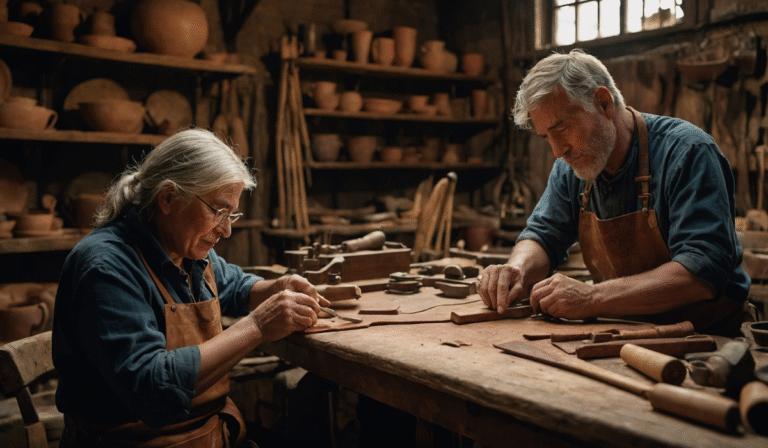
In an age of disposable everything, a centuries-old tradition is quietly having its moment — and the people who practise it have never been busier.
Run your hand across a well-made leather bag. Feel the weight of it, the grain of the surface, the way the stitching sits flush and even along the seam. There is a particular satisfaction in that contact — an immediate, tactile sense that something was made with care, by someone who knew exactly what they were doing. In a world of fast fashion and throwaway goods, that sensation has become increasingly rare. And increasingly sought after.
Leatheling — the meticulous craft of transforming raw hide into functional, beautiful objects — is experiencing a quiet resurgence. Not the manufactured nostalgia kind, where heritage aesthetics are applied to mass-produced goods and sold at a premium. The real kind: a genuine return to hand skills, ethical materials, and objects made to last longer than a season.
What Leatheling Actually Is
At its most straightforward, leatheling is the art of working leather from raw material to finished piece. Cutting, shaping, stitching, edging, finishing — each stage requires its own skills, its own tools, and a level of patience that the modern production line was specifically designed to eliminate.
The craft has ancient roots. Leather was among the first materials human civilisations shaped into useful objects — clothing, armour, containers, ceremonial items. The techniques have evolved considerably since then, but the fundamental relationship between artisan and material has not changed much. You are still working with something that has its own character, its own grain, its own response to the tool in your hand. That conversation between maker and material is what defines leatheling, and it is what no automated process has yet managed to replicate.
The results speak for themselves. A well-leatheled bag does not simply hold your belongings. It develops a patina over years of use that makes it more beautiful, not less. It can be repaired rather than replaced. It tells a story — of where it was made, how it was made, and who has carried it.
Why It Matters Now
The timing of leatheling’s resurgence is not accidental. It arrives in direct response to the consequences of fast fashion: the environmental toll, the ethical failures, the exhausting cycle of buying and discarding and buying again.
Consumers are asking different questions than they were a decade ago. Not just “how much does it cost?” but “how long will it last?” Not just “does it look good?” but “where did it come from?” Leatheling answers those questions in a way that mass production structurally cannot.
The artisans practising this craft are typically working with ethically sourced leather from responsible suppliers. Many favour vegetable-tanned hides — processed using plant-based tannins rather than industrial chemicals, slower to produce and significantly gentler on the environment. Waste is minimised because every piece of material costs time as well as money, and skilled makers have an instinct for using it well.
The result is a supply chain with genuine accountability at every stage. You can, in many cases, trace the object in your hand back to the hands that made it. In an era of anonymous, opaque production, that transparency is worth something.
The Case for Durability
There is an economic argument for quality that the fast fashion industry has successfully obscured for decades: buying well once is cheaper than buying cheaply repeatedly.
A leatheled wallet, properly cared for, will outlast a dozen of its mass-produced equivalents. A handcrafted leather belt does not simply wear out — it wears in, the leather softening and conforming to its owner over time. When something does fail — a stitch loosens, a zip needs replacing — a skilled artisan can repair it, extending the object’s life further still.
This is not nostalgia talking. It is straightforward arithmetic. The higher upfront cost of a well-made leatheled piece is offset, usually entirely, by the cost of replacements never purchased. The environmental arithmetic is equally clear: one object made and kept is categorically better than many objects made and discarded.
The Craft Itself: What to Look For
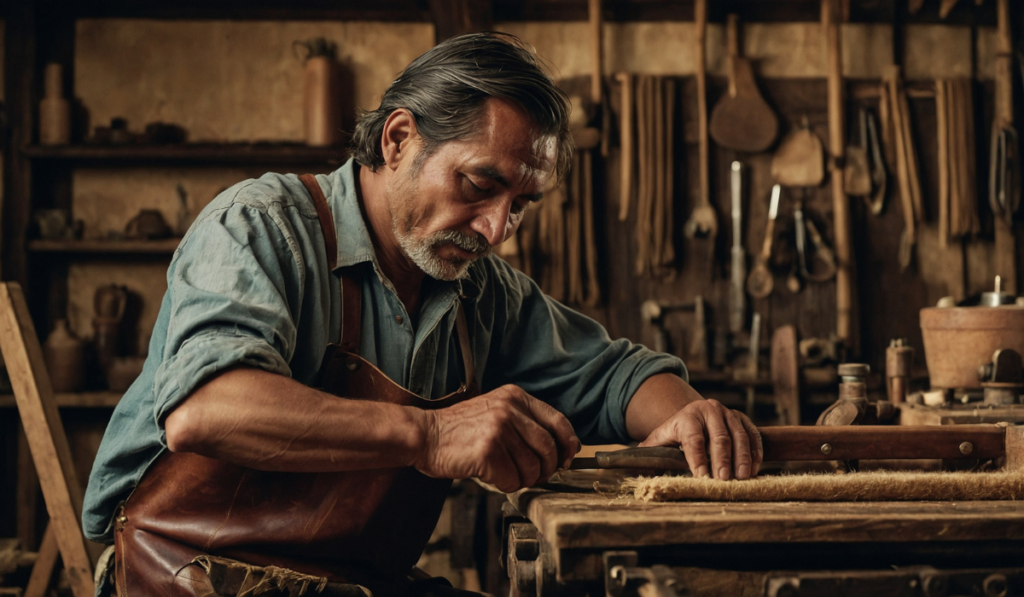
Understanding what distinguishes genuine leatheling from its imitations makes purchasing — and appreciating — these pieces considerably more rewarding.
The leather: Full-grain leather, which retains the complete surface of the hide including its natural grain, is the highest grade available. It is more durable than corrected-grain alternatives and develops the most expressive patina over time. Vegetable-tanned leather is the preferred choice among sustainability-conscious artisans. Run your hand across it: quality leather feels firm but supple, with no artificial stiffness or surface irregularities that suggest poor processing.
The stitching: This is where a practised eye immediately sees the difference. Hand-stitching — particularly saddle-stitching, where two needles work simultaneously through each hole — is structurally superior to machine stitching. If one thread breaks in a machine-stitched seam, the whole seam is vulnerable. In saddle-stitching, each stitch is independent. Look for evenness, tension, and clean finishing at the ends.
The edges: Finished, burnished edges are a mark of craftsmanship. Raw, unfinished edges — common in cheaper goods — fray and deteriorate over time. A properly finished edge is smooth, sealed, and often subtly coloured to complement the piece.
The overall finishing: Hold the piece and look at it from different angles. Quality leatheling has a consistency to it — no uneven surfaces, no glue residue, no areas where the maker’s attention lapsed. Imperfections tell a story too, but they should be the natural character of the material, not the result of careless execution.
Customisation: The Antidote to Uniformity
One of the more compelling pleasures of working with a leatheling artisan is the degree of personalisation available. This is not the mass-market version of customisation — initials stamped on a factory-made item — but genuine collaboration between maker and owner.
Stitching colours, hardware finishes, dimensions tailored to how you actually use the object, monograms worked into the design rather than applied as an afterthought — the possibilities are as broad as the artisan’s skills allow, which in the best cases is very broad indeed.
There is something quietly radical about owning an object designed specifically around your life rather than around a market segment. It changes your relationship with the thing itself: you use it differently, care for it more attentively, and are considerably less likely to discard it when the next trend arrives.
Caring for Leatheled Pieces
Quality leather rewards attention, and the maintenance required is less demanding than many people assume.
Regular cleaning with a lightly damp cloth removes surface dust and grime before it can work its way into the grain. A good leather conditioner — applied every few months, or whenever the surface begins to look dry — keeps the hide supple and prevents cracking. Storage matters too: a cool, dry environment away from direct sunlight preserves both the leather and any metal hardware.
The patina that develops over years of proper care is not a sign of wear. It is the object becoming itself — darkening at the edges, softening at the fold points, acquiring the specific character of the life it has been part of. It is, in a meaningful sense, the whole point.
Supporting the Craft
The leatheling community exists at the intersection of individual artisans, small studios, and a growing network of consumers who have decided that how things are made matters as much as what they look like.
Supporting it is straightforward: buy from makers who are transparent about their materials and methods. Ask questions about sourcing and process — any artisan worth their craft will welcome the conversation. Resist the pull of aesthetically similar but structurally inferior alternatives. And when something needs repair rather than replacement, find someone who can repair it.
The movement toward mindful consumption is sometimes framed as sacrifice — choosing less for the sake of the planet. Leatheling reframes it entirely. Choosing well is not a compromise. It is an upgrade: fewer objects, each one better, each one carrying genuine meaning.
The Ariel Verdict
Leatheling endures not because it is fashionable — though it is — but because it solves a problem that fast fashion created and cannot fix: the absence of objects worth keeping. In a culture that has optimised for cheapness and volume, craft that optimises for quality and longevity is not a niche interest. It is a genuine alternative.
Every stitch placed by hand, every edge burnished to a smooth finish, every piece of full-grain leather allowed to develop its natural character over years of use — these are quiet arguments for a different way of relating to the things we own. They are arguments that, increasingly, people are ready to hear.
Reader Questions
What type of leather is best for leatheled goods? Full-grain leather is the gold standard for durability and character development over time. Vegetable-tanned leather is the preferred choice for those with sustainability as a priority — the tanning process is slower and significantly less chemically intensive than conventional alternatives.
Are these pieces significantly more expensive than mass-produced alternatives? The upfront cost is higher. The lifetime cost is often lower, once you account for the replacements you never need to make. The durability and repairability of well-leatheled goods change the arithmetic considerably.
Can damaged pieces be repaired? Yes — and this is one of the craft’s most practical advantages. Broken stitching, worn edges, failing hardware: a skilled artisan can address all of these, extending the life of the piece well beyond what any mass-produced equivalent could achieve.
How do I find a reputable leatheling artisan? Look for makers who are forthcoming about their materials and methods, who show their work in process rather than just as finished product, and who can speak specifically about where their leather comes from. Craft markets, independent online platforms, and word of mouth within maker communities are all reliable starting points.
Is the craft environmentally responsible? It depends on the artisan and their sourcing choices. The best practitioners use ethically sourced, vegetable-tanned leather, minimise material waste, and produce objects designed to last decades. That combination makes a meaningful environmental case for the craft, particularly against the alternative of repeated consumption of fast fashion goods.
Own less. Choose well. Let the craft do the rest.
