


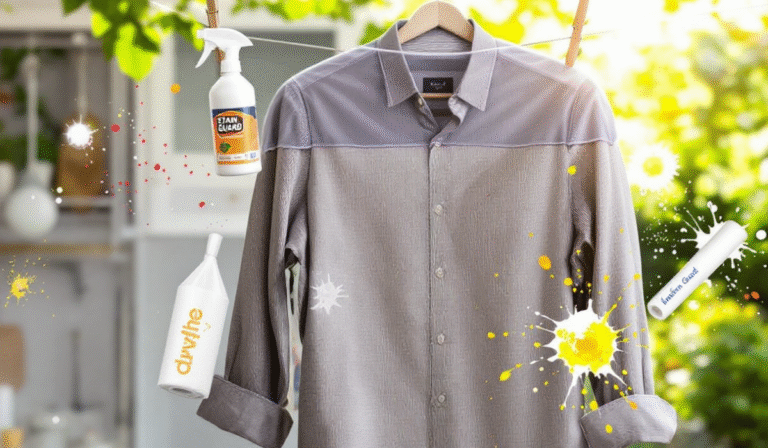
The oily splash is sudden, the damage immediate, and the frustration lasting. But preventing grease from ruining your clothing is simpler than most people realise — if you know where to start.
It always happens to the shirt you actually care about. Not the old one you keep for painting or gardening, but the white linen you saved for lunch, the soft cotton you reached for on a good day. One moment of inattention near a pan, a plate of pasta, a dripping sandwich — and suddenly you are standing there doing the mental arithmetic of whether cold water will save it or whether this is simply over.
Grease stains have a particular cruelty to them. Unlike most spills, they do not announce themselves dramatically. They seep in quietly, and by the time you notice the darkened patch spreading through the fabric, the oil has already begun its work. The good news is that knowing how to prevent grease stains on shirts — genuinely prevent them, before the moment of contact — changes this dynamic entirely. You stop reacting and start being prepared.
Start Before You Get Dressed: Fabric Treatments That Actually Work
The most effective defence against grease begins not in the kitchen or at the dining table, but well before any of that — with how your fabric is prepared.
Water-repellent sprays have come a long way from the stiff, breathability-killing coatings of earlier generations. Modern Teflon and silicone-based treatments create an invisible barrier across the surface of fabric fibres, causing oils and liquids to bead and sit on the surface rather than penetrating immediately. They work on most casual and workwear fabrics, they are reapplied easily after washing, and their effect is immediate. For anyone who cooks regularly or works in environments where grease contact is likely, treating shirts before wearing them is the single most practical step available.
Nanotechnology finishes represent the more advanced end of this spectrum. These treatments use microscopic barriers — invisible to the naked eye and undetectable in wear — to block grease while leaving breathability entirely intact. They are increasingly common in performance and workwear fabrics and are beginning to appear in everyday clothing as well.
For those who prefer not to reach for a commercial product, a straightforward mixture of white vinegar and water in equal parts, applied and allowed to dry, offers a gentler DIY alternative that still provides meaningful protection against light grease contact.
Commercial spray protectors — Scotchgard and Nikwax among the most reliable — sit between these two extremes: widely available, safe for most fabrics, and genuinely effective when applied correctly and refreshed regularly.
The Fabric Question: What You Wear Matters More Than You Think
Understanding how to prevent grease stains on shirts is partly a question of what those shirts are made of. Fabric choice is an underappreciated variable in this equation, and making informed decisions here pays dividends across the life of a garment.
Polyester blends are the pragmatist’s answer. Synthetic fibres naturally repel oils — the molecular structure simply does not absorb grease the way natural fibres do — and they are straightforward to clean when contact does occur. They are not always the most luxurious option, but for everyday wear in environments where grease is a realistic hazard, they are a sensible choice.
Microfibre works differently but effectively. Its tight weave means grease tends to sit on the surface rather than penetrating immediately, buying you time for a quick response before the stain sets.
Treated cotton — pre-finished during manufacturing with stain-resistant coatings — offers something closer to the comfort of natural fibre with some of the practical advantages of synthetics. It is worth looking for when shopping for shirts you intend to wear frequently and care for over time.
The honest caveat: untreated 100% cotton is the most vulnerable fabric in this context. It absorbs grease quickly and thoroughly. This does not mean avoiding it — a beautiful cotton shirt is a beautiful cotton shirt — but it does mean treating it proactively and being more deliberate about where and how you wear it.
The Kitchen and the Table: Habits Worth Developing
Preventive chemistry and fabric science can only do so much. The other half of knowing how to prevent grease stains on shirts is behavioural — and the adjustments required are small enough that they quickly become automatic.
The apron is the most obvious intervention and the most consistently underused. Wearing one while cooking is not a concession to domesticity; it is simply the recognition that the task involves heat, fat, and movement, and that a physical barrier between those elements and your clothing is more effective than any spray treatment. Keep one accessible rather than buried in a drawer, and the friction of using it drops to almost nothing.
At the table, napkin placement is more strategic than most people treat it. A napkin across the lap addresses splashes from below. A second napkin tucked at the collar — old-fashioned and entirely sensible — addresses the more common threat of drips from above, particularly with pasta, soup, or anything involving a sauce. Loose sleeves near shared dishes are a consistent hazard worth being conscious of.
The quick-response kit deserves a mention. A stain-removal pen or individually wrapped wipe kept in a bag or jacket pocket transforms the moment of contact from a slow-motion disaster into a manageable inconvenience. Speed matters enormously with grease — the sooner you address it, the less it has set.
When Contact Happens: Immediate Steps
Even with every precaution in place, grease occasionally lands where it should not. The response in the first minutes determines whether the stain becomes permanent or disappears entirely.
The first rule: blot, never rub. Rubbing spreads the grease laterally and drives it deeper into the fibres simultaneously. A gentle blotting motion with a clean cloth or tissue lifts what it can from the surface without making the situation worse.
Cornstarch or baking soda applied immediately to a fresh stain absorbs the grease from the surface before it can migrate further into the fabric. Leave it for fifteen to thirty minutes — longer if possible — before brushing away gently. This step alone makes a significant difference to how much remains to be dealt with in the wash.
A small amount of dish soap — Dawn is the most commonly recommended, for good reason — applied directly to the remaining stain and worked in gently with a fingertip before rinsing with cold water handles most of what the cornstarch leaves behind. Cold water throughout: heat sets grease, and hot water at this stage can turn a recoverable situation into a permanent one.
Laundry: Where Prevention Becomes Preservation
The washing process is where grease stain prevention either holds or fails. Several habits make a meaningful difference.
Cold water washing is non-negotiable for grease-affected garments. Enzyme-based detergents — OxiClean and Zout are reliable options — actively break down oils in a way that standard detergents do not, working at the molecular level rather than simply moving grease around in the water.
Air drying, rather than machine drying, is the other critical habit. The heat of a dryer will set any residual grease that the wash did not fully remove, rendering it permanent. Inspect the shirt after washing and before it goes anywhere near heat. If the stain has not fully lifted, repeat the pre-treatment process rather than accepting the outcome.
Keeping heavily soiled items separate from the rest of your laundry prevents grease from transferring to clean garments during the wash cycle — a small logistical step that prevents a frustrating and avoidable problem.
When to Call in Professional Help
Some stains, and some fabrics, require more than home treatment can provide. Silk, wool, and other delicate materials should generally go to a professional dry cleaner rather than being subjected to DIY intervention — the risk of damaging the fabric in the attempt to save it is real.
Set-in stains that have survived multiple wash cycles are also better handled professionally. Industrial solvents and steam treatments available to dry cleaners operate at a different level of effectiveness than anything achievable at home, and the cost of professional care is almost always less than the cost of replacing a garment you valued.
The Ariel Verdict
Grease stains are not inevitable. They feel that way because most people approach the problem reactively — responding to damage after it has occurred rather than reducing the likelihood of it happening at all. Understanding how to prevent grease stains on shirts properly means building a few deliberate habits and making a handful of considered choices: the right fabric treatments, the right fabrics, the right responses in the moment, and the right laundry practices afterward.
None of this is complicated. None of it requires significant investment of time or money. What it requires is treating your clothing with the same intentionality you bring to choosing it — which, if you care about what you wear, is a standard worth maintaining.
Reader Questions
What is the single most effective thing I can do to prevent grease stains? Apply a fabric-repellent spray to shirts before wearing them in high-risk environments. It is the highest-leverage single action available and takes approximately thirty seconds.
Does fabric colour affect how visible grease stains are? Yes — darker fabrics conceal grease stains better than light ones, though the stain is still there and still damages the fabric over time if untreated. Lighter fabrics show stains more immediately, which at least prompts faster action.
Can I reapply stain-repellent spray after washing? Yes, and you should. Most fabric protectors wash out over time and need to be reapplied every few washes to maintain their effectiveness.
Is dry cleaning always necessary for delicate fabrics? For silk, wool, and similarly delicate materials, yes — the risk of home treatment causing additional damage is too high. For most everyday fabrics, home treatment is sufficient if done promptly and correctly.
Does baking soda work as well as cornstarch for fresh grease stains? Both work on the same principle — absorption — and both are effective. Cornstarch is slightly more absorbent, but baking soda has the added benefit of neutralising any odour associated with the grease. Either is a reliable first response.
The best time to deal with a grease stain is before it happens. The second best time is immediately after. Everything else is damage control.
