


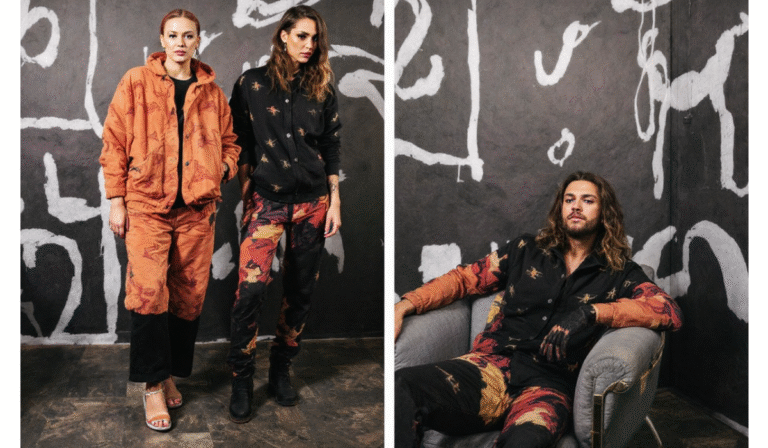
In an industry built on excess, Terry Mill Fashion Xerotica arrived with a different proposition entirely: that the most compelling thing a brand can do is mean something.
There is a particular kind of exhaustion that sets in when you have scrolled through enough fashion content. Everything begins to blur into a single, undifferentiated stream of the same silhouettes, the same neutral palettes, the same carefully curated sameness dressed up as individuality. You start to wonder whether anyone in the industry is genuinely trying to say something — or whether the whole enterprise has quietly given up on the idea that clothing can carry a point of view.
And then, occasionally, something interrupts the scroll.
Terry Mill Fashion Xerotica is that interruption. It is a brand that arrived not with a whisper but with a deliberate statement of intent — that fashion can be bold without being wasteful, inclusive without being generic, and genuinely creative without losing sight of the world it exists within. It is, in the truest sense, a brand with a position.
Where It Begins: Three Principles, No Compromises
Most fashion brands have values the way politicians have policies — stated clearly, revisited rarely, and quietly abandoned when inconvenient.
Terry Mill operates differently. Its founding principles are not marketing copy. They are design constraints, built into every decision from the first sketch to the final stitch.
The first is unapologetic creativity. Asymmetrical cuts that challenge conventional symmetry. Geometric patterns applied with the confidence of someone who has genuinely studied them. Sheer layered fabrics that reward a second look. The aesthetic is not difficult for the sake of difficulty — it is demanding because the brand believes the people wearing it are capable of meeting that demand.
The second is sustainable integrity. Organic cotton. Recycled polyester. Plant-based dyes that replace chemical processes with something considerably kinder to the soil and water around the factories producing them. These are not gestures toward sustainability. They are the baseline from which every collection is built.
The third is inclusivity — and here, more than anywhere, the brand earns the word it uses. Sizing that runs from XS to 4XL, not as an afterthought added to the product page but as a design commitment that shapes the way garments are constructed from the beginning. Adaptive styling that does not assume a single body type as its reference point. The understanding that clothing which only works for some bodies is, in fact, clothing that has not finished its job.
The Fabric That Started a Conversation
“Terry cloth had been living in bathrooms and beach bags for decades, waiting for someone to realise what it was actually capable of.”
The story of Terry Mill’s relationship with terry cloth is worth telling properly because it illustrates something important about how this brand thinks.
Terry cloth — the looped, absorbent fabric most associated with towels and robes — had spent the better part of a century being quietly underestimated. It was practical. It was comfortable. But it was not, by any conventional measure, fashionable.
Terry Mill looked at this fabric and saw something else entirely. Structured correctly, it holds a shape with quiet authority. Cut thoughtfully, it sits on the body with a weight that cheaper materials cannot replicate. The result — cycling dresses with genuine architectural presence, lounge sets that transition from morning to evening without apology, beach cover-ups that require no explanation when worn somewhere that is not a beach — is a collection that makes you reconsider what you thought you knew about a material you have touched every day of your life.
This is what good design does. It does not invent new materials so much as it sees existing ones clearly.
The Collections: Wearable With Intent
The Terry Towelling pieces are the brand’s most recognisable signature and, in many ways, its most persuasive argument. A tailored terry cloth blazer worn over narrow trousers is not a casual piece pushing above its station. It is a genuinely polished garment that happens to be made from a fabric with an interesting history.
The Futuristic Minimalism line operates at the opposite end of the texture spectrum — clean lines, structured silhouettes, and the occasional unexpected detail that rewards a closer look. A blazer with a hidden zipper running along an unconventional seam. Relaxed jeans finished with a holographic accent that catches light without demanding attention. These are clothes for people who have moved past the need for obvious signals.
The Retro Reimagined collection takes familiar shapes — the tea dress, the 1970s flare — and updates them not by adding modernity but by removing excess. Bold colour-blocking where a previous generation might have chosen pattern. An asymmetrical hemline where a conventional cut would have been easier. The past, re-read with fresh eyes.
The Confidence-Boosting Silhouettes are perhaps the most directly personal of the collections — bodycon dresses with strategic cut-outs, adjustable waistbands that accommodate real bodies at the end of real days. These are clothes that work with the wearer rather than imposing a shape upon her.
Sustainability That Goes Beyond the Label
The fashion industry has developed a complicated relationship with the word sustainable. It has been used to describe everything from a single recycled button on an otherwise conventional garment to genuine systemic commitments that reshape the entire production process. The distinction matters, and Terry Mill sits firmly at the serious end of the spectrum.
Its circular fashion programme takes returned garments and feeds them back into the production cycle, turning old pieces into new collections rather than landfill. Its low-waste cutting process is designed around precision — fabric offcuts that would be discarded elsewhere become accessories, scrunchies, tote bags, small items that extend the life of the material rather than ending it at the factory floor.
Most significantly, every garment is produced in certified factories operating under independently verified standards of fair pay and safe working conditions. This is not a claim the brand makes and leaves unexamined. It is a commitment backed by audits, certifications, and a supply chain the brand is willing to be transparent about.
Style and sustainability are not in opposition. Terry Mill’s entire existence is the proof.
How to Wear It: Five Starting Points
For the morning that becomes an evening. A terry cloth hoodie over bike shorts is a complete casual look before noon. Replace the sneakers with ankle boots and add a single piece of good jewellery after six, and the outfit has shifted registers entirely without requiring a change of clothes.
For the office that takes itself seriously. A geometric-print blazer paired with well-tailored trousers and loafers is the kind of outfit that reads as completely considered without appearing to have tried. A silk scarf adds colour without disrupting the authority of the silhouette.
For the weekend that has no agenda. A sheer embroidered kimono thrown over a camisole and high-waisted jeans is bohemian in the best sense of the word — unhurried, layered, and entirely comfortable with itself.
For movement that still wants to look good. Moisture-wicking leggings with an oversized graphic tee and chunky sandals is the athleisure proposition done properly — functional without sacrificing the visual coherence that separates a considered outfit from simply wearing workout clothes in public.
For the evening that matters. A slip dress elevated with metallic heels and a small clutch is the simplest path to genuine elegance. Or, for a different kind of evening, the same dress toughened with a leather moto jacket and an entirely different set of shoes. One piece, two complete ideas.
The Larger Conversation
What Terry Mill Fashion Xerotica is doing extends beyond the clothes themselves.
Its collaborations with body-positive advocates and climate activists are not celebrity endorsements attached to products for commercial leverage. They are genuine alignments between a brand and people whose work reflects the same values. The #ReWearRevolution campaign — which invites the brand’s community to share creative ways of restyling existing pieces — is not a marketing exercise. It is a direct challenge to the disposability model that the rest of the industry runs on.
When a fashion brand builds a community around the idea of buying less and wearing more creatively, it is doing something unusual enough to deserve acknowledgement. It is prioritising longevity over volume. It is treating its customers as participants rather than consumers.
That is not a small thing.
A Closing Thought
Fashion, at its best, has always been a form of argument — a position taken in public, every day, about who you are and what you think the world should look like.
Terry Mill Fashion Xerotica is making that argument clearly. Its clothes say that you can be bold without being careless. That you can dress with genuine creativity and still give consideration to the people who made what you are wearing and the planet that provided the materials. That inclusivity is not a concession but a design standard.
These are not radical ideas. They should, in truth, be unremarkable. The fact that they still feel distinctive in the current fashion landscape says more about the industry than it does about the brand.
Terry Mill is not waiting for fashion to catch up. It is simply getting dressed.
Frequently Asked Questions
Is terry cloth really suitable for anything beyond loungewear? In the hands of a less imaginative designer, perhaps not. But Terry Mill’s tailored dresses, structured blazers, and polished cover-ups demonstrate convincingly that the fabric’s limitations were always a failure of vision rather than material. When cut and constructed with intention, terry cloth holds shape and carries authority that many conventional fashion fabrics cannot match.
How should I care for recycled polyester garments? Machine-wash on a cold cycle and air-dry wherever possible. Cold washing preserves the integrity of the fabric and significantly reduces the shedding of microfibres into the water supply — a genuine environmental consideration that is worth the small additional effort of skipping the tumble dryer.
Do these designs actually work across different body types? This is where the brand’s commitment to inclusive design becomes visible in practical terms. Stretch fabrics, adjustable straps, and a sizing range from XS to 4XL are not afterthoughts — they are built into the construction of each piece from the beginning. The result is clothing that fits a genuinely wide range of bodies rather than a narrow default.
Can Terry Mill pieces be worn year-round? Yes, and the versatility is genuine rather than theoretical. Terry cloth dresses layered with opaque tights and ankle boots carry through autumn and winter without difficulty. Sheer blouses worn over fitted tanks are a natural summer choice. The collection is designed with layering in mind, which extends its wearable range considerably beyond a single season.
Where can I find secondhand Terry Mill pieces? The brand maintains active partnerships with established resale platforms, and hosts seasonal pre-loved events where previous collections are made available at reduced prices. For a brand this committed to circular fashion, the secondhand market is not an afterthought — it is a deliberate extension of the original purchase.
